
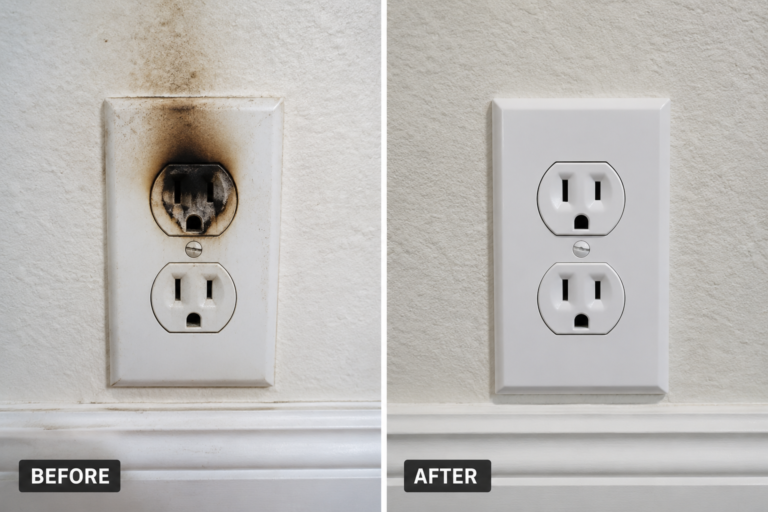
Most electrical problems give you warning signs long before they become emergencies. Knowing what to watch for — and when to call a licensed electrician — is the practical part of home electrical safety. MDBC Electric serves Ventura and Santa Barbara counties (CSLB #1158234). This page is contractor education, not medical or product-safety-agency advice.
Warning Signs to Watch For
- Outlets or switch plates that are warm, discolored, or scorched
- A burning or fishy smell near outlets or the panel
- Lights that flicker or dim when appliances kick on
- Breakers that trip repeatedly, or buzzing/crackling sounds
- Sparks when plugging in, or two-prong ungrounded outlets
A breaker that trips once when a space heater and a hair dryer share a circuit is overload. A breaker that trips with normal use, or a smell at the panel, is a reason to stop using that circuit and call. Troubleshooting: small repairs & troubleshooting.
GFCI & AFCI Protection
GFCI outlets cut power quickly when they sense current going where it shouldn’t — they’re required near water, in kitchens, bathrooms, garages, and outdoors under current code. AFCI breakers protect against arcing on a circuit, and are required in most living areas of newer homes (and on many permitted rewires). If your home lacks them, adding GFCI and AFCI where code now calls for them is a high-value safety upgrade.
Test GFCIs with the built-in button. If it does not trip and reset, replace it. Combination AFCI/GFCI breakers exist so one device can cover both. Panel space and bus type matter; see electrical panels and outlets, switches & surge protection.
When to Call an Electrician
Swapping a listed lamp is DIY. Anything involving the panel, new circuits, warm or sparking outlets, or wiring behind the walls is a job for a licensed electrician — both for safety and to keep the work up to code and insurable. Unpermitted work can become a problem at sale or claim time. Process: permits & inspections.
Simple Safety Tips
- Don’t overload outlets or daisy-chain power strips
- Test GFCI outlets monthly using the built-in button
- Replace damaged cords instead of taping them
- Give large appliances their own dedicated circuits
Smoke alarms, CO alarms, and why electricians get involved
Permitted rewires, additions, and many panel upgrades trigger current requirements for smoke alarms and, where fuel-burning appliances or attached garages exist, carbon monoxide alarms. That is building code, not a medical claim. We install hardwired alarms with battery backup when the permit requires it, and we interconnect them as the adopted code says. We do not diagnose health symptoms.
Extension cords, space heaters, and “just for now”
Extension cords are for temporary use, not as permanent wiring under a rug. Space heaters belong on a dedicated or lightly loaded circuit, not on a power strip. If you need more outlets in a room, the durable fix is a new receptacle or circuit — outlets & switches — not another strip. Whole rooms of two-prong devices point to rewiring.
Water, outdoors, and the garage
Kitchens, baths, laundry, garages, crawlspaces, and exterior receptacles are GFCI territory. Outdoor covers should stay listed “in use” covers where cords stay plugged in. Landscape lighting and EV charging have their own listing and disconnect rules: lighting guide and EV charger guide.
Panel red flags (without the scare script)
A warm deadfront, rust, scorch at a lug, or a buzzing panel is not a wait-and-see item. Turn off what you can safely reach if you smell burning at the box, leave the house if you see smoke, and call. Recalled or problem brands (including some Federal Pacific and Zinsco equipment) belong in the upgrade conversation. Capacity questions: Do I need a 200A service? Work: panel upgrades.
Kids, rentals, and tamper-resistant receptacles
Current code requires tamper-resistant receptacles in most dwelling units. They are a mechanical shutter, not a gadget. Rentals still need working smoke alarms, GFCIs where required, and no exposed splices. Landlords: unpermitted DIY in a unit is your problem at inspection. We can walk a property and list what is actually out of date versus what is optional.
See something on this list? Call (805) 627-4697 or email (805) 627-4697.